

A Guide to Baidu's Ecosystem: Search, Baike, Zhidao, Baijiahao and AI Search

Baidu is still a key place where Chinese users actively look up brands, but it is far more than a search box. Baike, Zhidao, Baijiahao and the Baidu app together shape how a brand appears in results and AI answers, so manage them as one system.
Why does Baidu still matter?
Google is not available in China, and when users actively search for brands, products and suppliers, Baidu remains one of the main general search engines. StatCounter data show Baidu held 46.65% of China's search engine market in September 2026, the largest share.
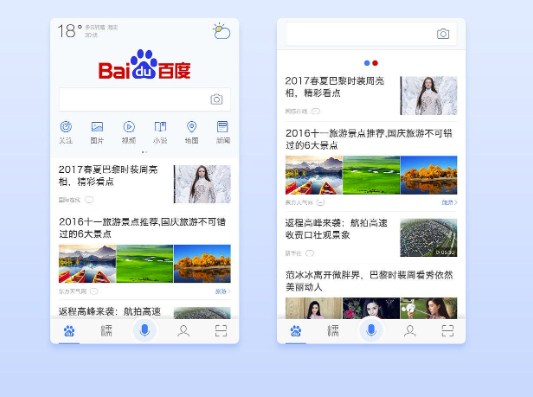
The Baidu app is the mobile gateway to the ecosystem. According to Baidu's second-quarter 2026 results, the app had 644 million monthly active users in June 2026.
Search behaviour in China has fragmented: many people check reviews on Xiaohongshu, watch product videos on Douyin and search articles inside WeChat. But for considered searches such as B2B sourcing, brand verification and company background checks, Baidu's ecosystem is still ground a brand has to manage.
What makes up the Baidu ecosystem?
Search sits at the centre, but much of what appears on a results page comes from Baidu's own products. The most relevant for marketers are:
- Baidu Search and the Baidu app: organic results, paid search ads (SEM), and the search-plus-feed experience inside the app.
- Baidu Baike: the Chinese-language online encyclopedia, whose brand and company entries usually rank near the top.
- Baidu Zhidao: a Q&A community that captures long-tail questions such as how to choose or which supplier is best.
- Baijiahao: Baidu's content publishing platform, whose articles can surface in Baidu search and the feed.
- Other products: Baidu Wenku, Baidu Maps and Baidu Drive also affect visibility in certain sectors and situations.
These products feed one another. When users search for a brand, they usually see a mix of the Baike entry, Baijiahao articles, Zhidao answers and the official site, not the official site alone.
Baidu Baike: the brand's official profile
Baidu Baike has long been the first stop for Chinese users who want to learn about a company or brand. An accurate, complete entry builds basic trust before a user visits the website or makes a purchase decision.
Baike has strict editorial rules: content must be neutral, backed by reliable references and free of advertising copy. Brands should therefore have citable public material ready, such as the official site, reputable media coverage and company announcements, and review the entry regularly so the name, business and key facts stay current.
Zhidao and Baijiahao: answer questions, publish content
Baidu Zhidao hosts questions real users ask, such as how to choose a product type or whether a brand is reliable. Brands can appear in these long-tail searches with expert, objective answers, but the content has to be genuinely useful rather than advertising.
Baijiahao is a brand's content base inside the ecosystem. Companies can open a verified official account and publish industry views, product knowledge and company news, which can then appear in Baidu search results and the Baidu app feed. For foreign brands with little Chinese media coverage, Baijiahao is an effective way to build Chinese-language content.
What has AI search changed?
Baidu is turning search into AI search. Its third-quarter 2025 results state that in October 2025 roughly 70% of Baidu's mobile search result pages contained AI-generated content. The answers are powered by Baidu's ERNIE (Wenxin) models, and Baidu released ERNIE 5.1 in May 2026.
Users increasingly see an AI summary first rather than ten blue links. Whether a brand is mentioned accurately in those answers depends on whether clear, credible, well-structured Chinese information exists online, including Baidu's own Baike, Baijiahao and Zhidao content.
That is the problem generative engine optimization (GEO) addresses: making sure brand information is understood and cited correctly, not only in Baidu's AI search but also in AI assistants such as DeepSeek, Doubao and Qwen. See Dékuple China's GEO service for more.
How should a foreign brand get started?
- Audit what is there: search Baidu for your brand name, product names and common questions, and check what ranks first and whether it is accurate.
- Build the basics: a solid Chinese-language website, a created or updated Baike entry, and a verified Baijiahao account.
- Cover real questions: publish expert Chinese content around the questions customers actually ask.
- Combine paid and organic: use Baidu SEM for high-intent keywords and SEO plus content for long-term visibility.
- Track AI answers: regularly check how Baidu AI search and the main AI assistants describe your brand.
Dékuple China's SEO and SEM search marketing service helps brands manage the Baidu ecosystem systematically.
Key Data & Sources
| Data | Value | Source |
|---|---|---|
| China search engine market share (StatCounter, September 2026, all platforms) | Baidu 46.65% | https://gs.statcounter.com/search-engine-market-share/all/china |
| Baidu app monthly active users (June 2026, Baidu Q2 2026 results) | 644 million | https://www.sec.gov/Archives/edgar/data/1329099/000119312526355431/d112854dex991.htm |
| Share of Baidu mobile search result pages with AI-generated content (October 2025, Baidu Q3 2025 results) | Roughly 70% | https://www.sec.gov/Archives/edgar/data/1329099/000119312525285391/d52736dex991.htm |
| Baidu launches ERNIE 5.1 (Baidu Q1 2026 results) | May 2026 | https://www.sec.gov/Archives/edgar/data/1329099/000119312526228123/d156481dex991.htm |
FAQ
Do foreign brands in China still need Baidu marketing?
Yes. StatCounter shows Baidu was still the largest search engine in China in September 2026, and the Baidu app has more than 600 million monthly active users. For considered searches such as B2B sourcing and brand checks, Baidu remains an important entry point.
Can a brand write its own Baidu Baike entry?
It can take part in creating and editing it, but the content must be neutral, supported by reliable references and pass Baike's review. Promotional wording is usually rejected.
How does Baidu's AI search affect brands?
In October 2025 roughly 70% of Baidu's mobile search result pages contained AI-generated content. Brands need clear, credible Chinese information online to be mentioned accurately in AI answers, which is the core of GEO.