


Browse by topic
GEO & AI search
9 piecesGEO (generative engine optimization) and AI search marketing: assistants like Doubao, DeepSeek and Yuanbao now shortlist brands for buyers. How to get seen, cited and recommended.
- Central Air Conditioning in AI Search: A GEO Analysis of 108 Questions and 1,138 Citations Across Four Platforms
- DeepSeek and Doubao Barely Cite the Same Pages: A GEO Analysis of 703 AI Citations on Electric SUVs
- How to Use Baidu's AI Traffic Analysis: Citations, Impressions and Clicks from Baidu AI Answers
WeChat & SCRM
3 piecesWeChat marketing and SCRM: Official Accounts, Mini Programs, WeCom and private traffic — turning WeChat traffic into customers you can nurture and convert.
- B2B lead management in China: why use SCRM, and what to build lead forms with
- WeChat 10w+ marketing review: what marketers read, liked and shared over 30 days
- WeChat SCRM in China: A Practical Guide from QR Codes to Segmentation
China marketing platforms
7 piecesBaidu, Xiaohongshu and Douyin marketing: how China's marketing platforms work — rules, audiences and ad buying — and how they differ from the West.
- China websites: should Baidu Tongji replace GA, and how to speed up a site hosted abroad
- Is WeChat official account content worth it for B2B brands? It depends on focus and data
- Should B2B brands do content marketing on Zhihu? Six signs it fits
China market strategy
16 piecesChina market entry strategy: consumer journeys, industry trends, positioning, localization and growth paths for international brands in China.
- CHAGEE's Paris Olympic Pop-up: How a Chinese Tea Brand Got Noticed at Gare Saint-Lazare
- What content wins B2B leads in China? Fair value exchange and instant trust
- B2B content marketing in China: three questions on starting, tone and expertise
All insights
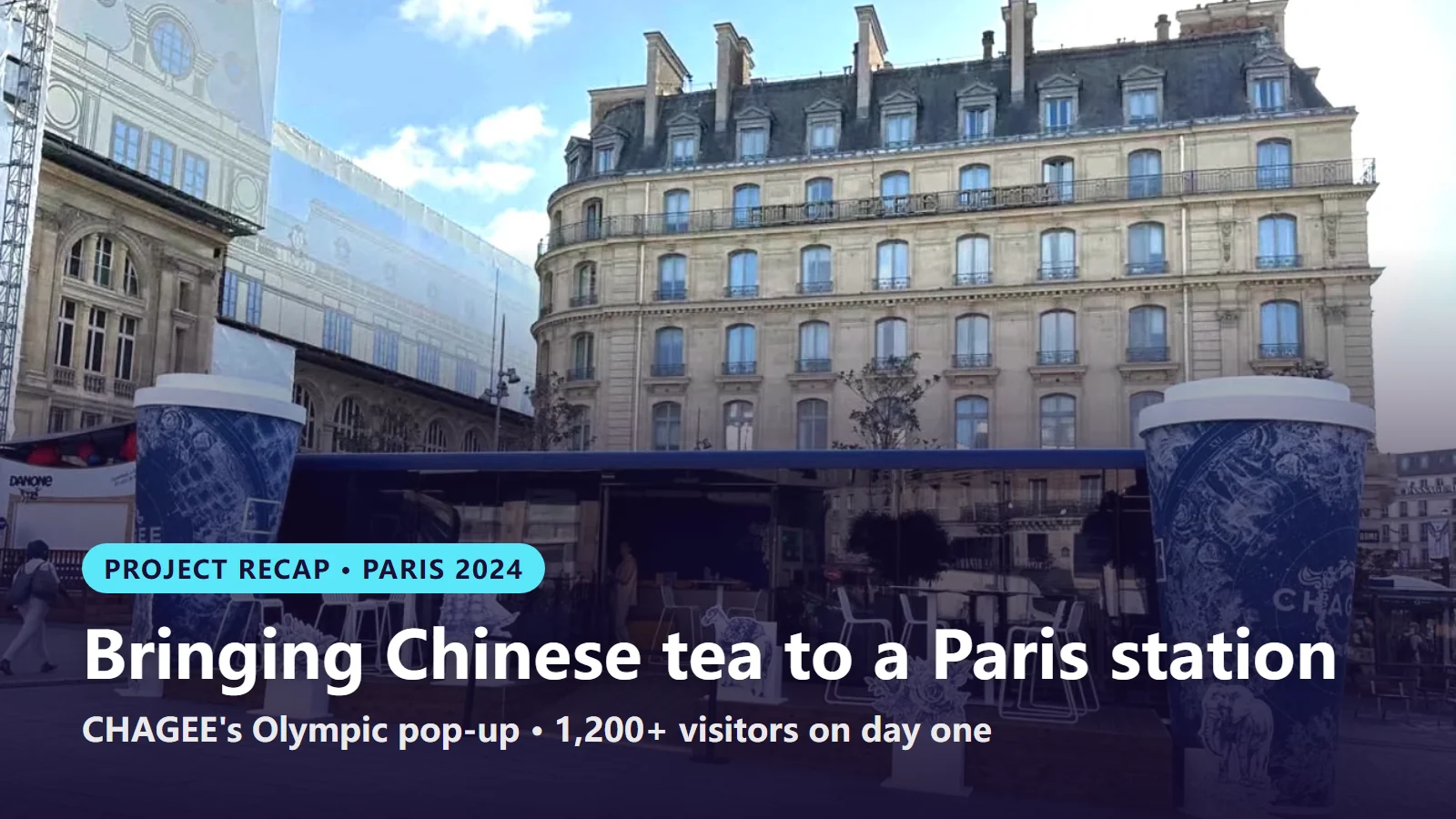
- CHAGEE's Paris Olympic Pop-up: How a Chinese Tea Brand Got Noticed at Gare Saint-Lazare During the Paris 2024 Olympics, CHAGEE ran a three-week pop-up tea bar in front of Gare Saint-Lazare. Day one brought more than 1,200 visitors and 5,300 interactions. The project was delivered by Brainsonic Live, Dékuple Group's team in France. Dékuple China Editorial Team
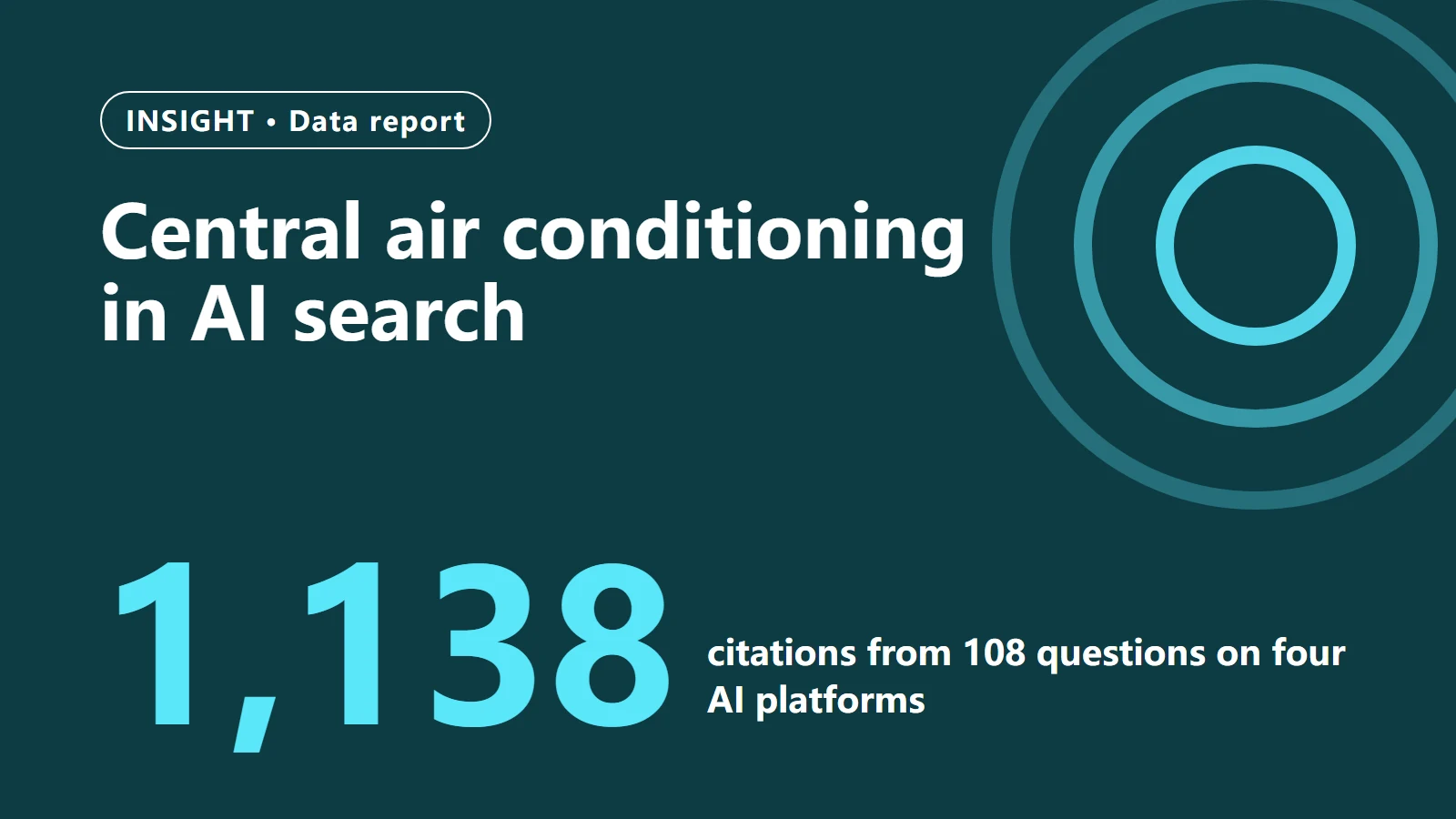
- Central Air Conditioning in AI Search: A GEO Analysis of 108 Questions and 1,138 Citations Across Four Platforms When buyers ask AI about central air conditioning, the four main Chinese assistants recommend very different brands for the same category, and brand websites make up only 17.4% of cited sources. Brands need to plan by platform, category and region, and make their own sites readable for AI. Boson Yang
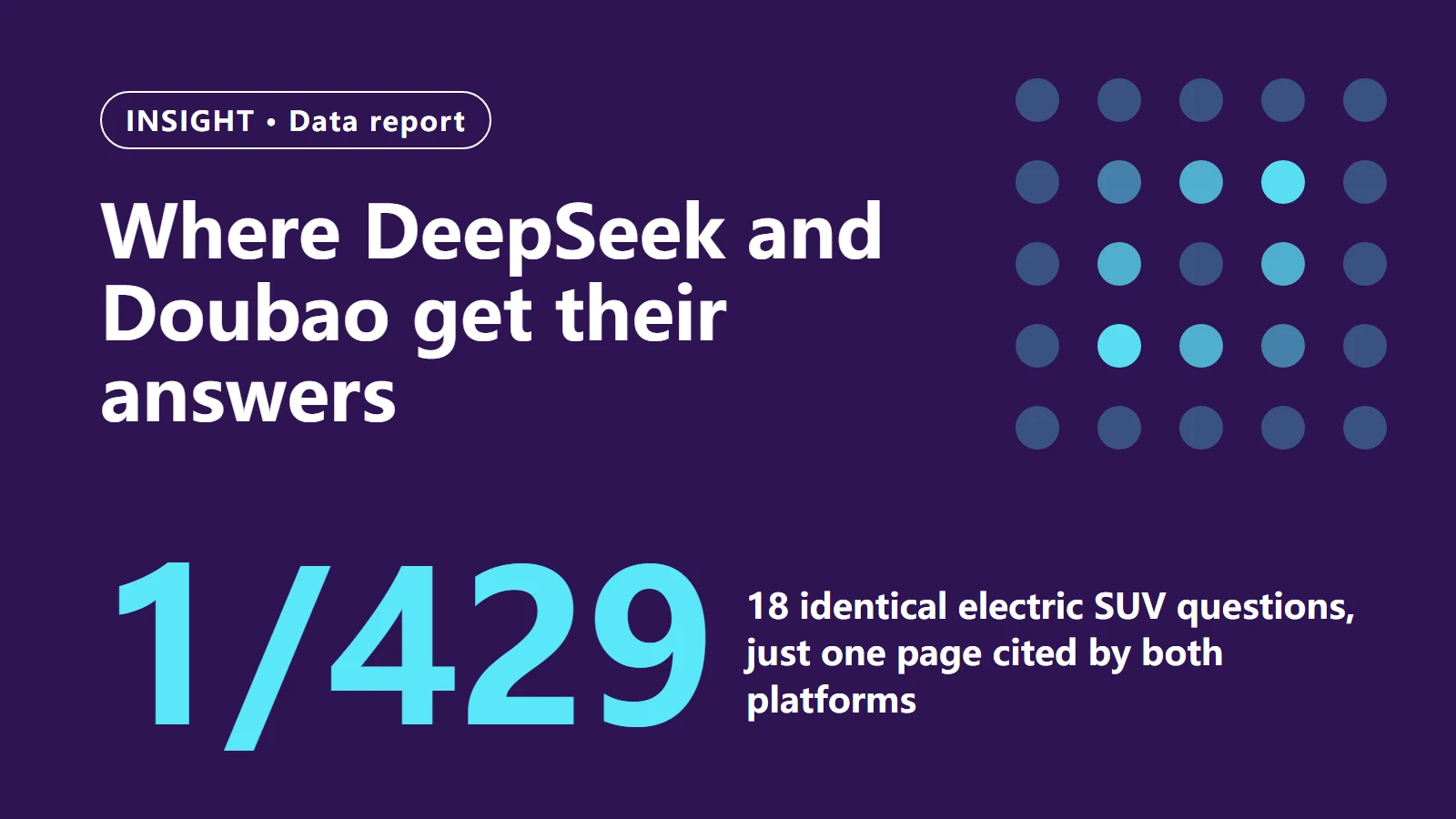
- DeepSeek and Doubao Barely Cite the Same Pages: A GEO Analysis of 703 AI Citations on Electric SUVs Asked the same 18 electric SUV questions, DeepSeek and Doubao cited 429 pages and shared only one. Half of Doubao's citations come from ByteDance properties, DeepSeek leans on auto media and complaint sites, and brand websites are largely absent from after-sales answers. Boson Yang
- How to Use Baidu's AI Traffic Analysis: Citations, Impressions and Clicks from Baidu AI Answers Baidu Search Resource Platform's AI Traffic Analysis lets a website see, for the first time, how often Baidu's AI answers cite it and how many people see and click those citations. It covers Baidu search only, not DeepSeek or Doubao, so treat it as your Baidu-side GEO baseline. Dékuple China Editorial Team
- SEO is more than "adding more keywords": how experts and non-experts see it SEO looks simple but isn't easy. Keywords are a small part: search intent, crawling and rendering, content structure, entities, internal links and schema, third-party authority, and now AI citations decide whether a brand gets seen. Dékuple China Editorial Team
- China websites: should Baidu Tongji replace GA, and how to speed up a site hosted abroad Install both Baidu Tongji and GA on a China website: Baidu integrates Baidu ads data, while GA analyses better but is often disrupted in mainland China. No tool fixes slowness from overseas hosting; move servers, add a CDN and optimise the site. Boson Yang
- B2B lead management in China: why use SCRM, and what to build lead forms with B2B brands generating leads digitally in China need SCRM in the long run, because WeChat's own data and features can't nurture users well. Build lead forms in SCRM or marketing automation, so the data can be reused to nurture and score leads. Boson Yang
- Is WeChat official account content worth it for B2B brands? It depends on focus and data Whether WeChat content works for B2B depends on focus and data. Give every piece a clear stage and target audience, then use SCRM to segment followers, score behaviour and trace sources, so content stops being guesswork. Boson Yang
- Should B2B brands do content marketing on Zhihu? Six signs it fits Zhihu can work for B2B brands, but not for all. Its value lies in search weight, education and reputation. Invest when you have solid expert content, your audience uses Zhihu or competitors are already visible there, and prepare properly. Boson Yang
- What content wins B2B leads in China? Fair value exchange and instant trust The content that wins B2B leads makes people willing to fill in a form. It usually does two things: offers a fair value exchange by solving a real problem, and builds instant trust through credible authorship and clear data protection. Boson Yang
- B2B content marketing in China: three questions on starting, tone and expertise B2B digital work should start with content, because long buying cycles need steady nurturing. Professional doesn't mean serious: content must be precise and still interesting. An agency adds value by getting purpose, message, audience, channel and style right. Boson Yang
- Baidu SEM for B2B: where the leads come from, winning over HQ, and the four phases Baidu is still China's largest search engine, but B2B brands mostly reach smaller companies there. To win over headquarters, compare SEM with what Google search does for them abroad, then run it in four phases and allow 2–4 weeks to open the account. Boson Yang
- Dékuple Group and ESCP Business School: three years of partnership, 46 students on agentic AI, M&A and MarTech Dékuple Group and ESCP Business School are in their third year of partnership: 46 master's students spend a month on three real Group challenges (agentic AI, M&A and loyalty, international MarTech), with a final defence on 20 November. Dékuple China Editorial Team
- Your Google Analytics is probably under-reporting. Here's how we fixed one in a day After a site relaunch, GA4 showed organic search down about 65% while Search Console showed only 20%. The cause was measurement, not marketing: a cookie banner blocking analytics by default, leftover tags and unfiltered internal traffic. Seven steps fixed it in one working day. Boson Yang
- WeChat 10w+ marketing review: what marketers read, liked and shared over 30 days From mid-September to mid-October 2026, AI tools produced the most 10w+ posts among marketing trade accounts and the highest likes, but breaking news, emotional topics and brand collaborations drove sharing. Only a handful of trade accounts produce 10w+ posts consistently. Boson Yang
- AI search and GEO: from being seen to being recommended — Dékuple China at CCI France Chine GEO is not just about being seen by AI but about making its shortlist. China's AI platforms draw on different sources, so brands need a localised multi-platform strategy, treat GEO as long-term work and judge it by business results. Dékuple China Editorial Team
- Getting Cited by AI Search: A Practical GEO Guide GEO makes your content reliable material for AI answers: lead with a takeaway, source your data, structure Q&A, complete your schema markup, earn corroboration from authoritative third parties, and keep measuring your mentions and citations in each AI assistant. Boson Yang
- Dékuple China signs strategic partnership with Shanghai's national IP operations platform Dékuple China has signed a strategic partnership with Shanghai International Intellectual Property Operation Management Co., Ltd., combining IP operations with AI brand technology to help Chinese companies build brands abroad. Dékuple China Editorial Team
- Good partnerships put the client centre stage: three years with Mersen, from website to GEO A good partnership doesn't make decisions for the client; it gives them the judgement to decide. With Mersen we went from a 2024 website SEO rebuild to 2025 training and a 2026 GEO project covering 150+ questions. Dékuple China Editorial Team
- GEO class: auto media platforms move from selling traffic to being the source When AI answers car-buying questions, it mainly cites specialist auto media. Their value is shifting from traffic to being cited, so carmakers and Tier 1 suppliers should store data there in AI-readable form and monitor results. Dékuple China Editorial Team
- GEO class: do Tier 1 auto suppliers need GEO too? Tier 1 suppliers need GEO too. B2B buyers now use AI to pre-screen suppliers and drivers care about component brands. AI trusts verifiable expert content, so turn test data and white papers into sources it cites. Dékuple China Editorial Team
- Marketing Strategy for China: Building a Brand for a Chinese Audience A China strategy starts with research, not translation. Almost everyone is online and on mobile, so the real work is choosing platforms, defining precise personas and making content discoverable on social, search and, increasingly, AI assistants. Benoit Raoult
- The Chinese Consumer Journey: Why It Is a Loop, Not a Line In China the consumer journey is a loop driven by social proof. People discover, evaluate and often buy inside social platforms, then post reviews that start the next shopper's journey. Brands that plan for every stage, including advocacy, win repeat purchases. Benoit Raoult
- Chinese student recruitment cheat sheet: digital platforms and a year-round communication timeline Recruiting Chinese students depends on platform choice and timing. WeChat runs through every stage, Q&A and forum sites serve the research phase, video and Xiaohongshu build awareness, and communication for a September intake should start a full year ahead. Benoit Raoult
- How to attract Chinese students: planning every touchpoint with the recruitment funnel Attracting Chinese students is not about posting on one platform. It means designing touchpoints along the funnel: social and search for awareness, website and Q&A content for comparison, and the website and WeChat for applications and enrolment. Benoit Raoult
- WeChat SCRM in China: A Practical Guide from QR Codes to Segmentation In China, social CRM runs on WeChat. Official Accounts, WeCom and Mini Programs capture users, parametric QR codes and dynamic tags record every interaction, and segment-based journeys turn followers into members and repeat customers. Wanting Zong
- A Guide to Baidu's Ecosystem: Search, Baike, Zhidao, Baijiahao and AI Search Baidu is still a key place where Chinese users actively look up brands, but it is far more than a search box. Baike, Zhidao, Baijiahao and the Baidu app together shape how a brand appears in results and AI answers, so manage them as one system. Boson Yang
- China's Snack Market Trends: Healthier Snacks, Discount Snack Chains and Online Growth China's snack market is large but fragmented, and growth comes from healthier products, discount snack chains and online channels. Imported brands are losing their edge to good-value local products and must win young consumers with clear positioning, the right pack sizes and social proof. Benoit Raoult
- The Rise of Coffee in China: Market Size, Key Players and the Yunnan Supply Chain China's coffee market is still growing, but the race has shifted from opening stores to winning on efficiency and price. Starbucks now runs China through a joint venture, Luckin leads on digital scale, and Yunnan is moving upmarket. Cate Liu
- Customer Journey Mapping: Your Customer-Winning Formula for China There is no single formula for marketing in China. A customer journey map is how you build your own: it shows, persona by persona, which platform, message and moment move people to buy, and where they drop off. Benoit Raoult
- Is Coffee the New Tea in China? How Coffee and Tea Cultures Meet Coffee will not replace tea in China, but it is entering daily life by borrowing the new-style tea playbook: milky and fruity drinks, seasonal launches and app ordering. Brands compete for occasions, not for coffee versus tea. Cate Liu
- Navigating China's Digital Landscape: Benoît Raoult's 2024 Perspective In 2024, Benoît Raoult argued that in a tougher Chinese market, return on investment drives digital decisions, and that brands must adapt tools, platforms and compliance to China's own ecosystem rather than copy what works in Europe. Cate Liu
- Performance marketing for business schools recruiting Chinese students For business schools recruiting in China, reputation is the base and performance marketing the amplifier. Send Baidu search ads and social campaigns to dedicated Chinese landing pages, and time messages to the student and parent journey, to turn attention into measurable applications. Benoit Raoult
- The BCP Marketing Pathway: Build Walls, Collect Grains, Push to Private Pool for B2B in China B2B digital marketing in China takes three steps: build solid owned channels, keep publishing expert content that earns leads, then nurture those leads in a private pool. All of it should start with a full digital footprint audit. Boson Yang
- Webinar recap (9 November 2023): recruiting Chinese students, best practices and mistakes to avoid This 2023 webinar helped European schools prepare their September 2024 intake from three angles: trends in Chinese families' study-abroad decisions, a digital marketing timeline for 2024, and social media best practice. Benoit Raoult
Nothing here for this filter yet.
Check it with data
Can AI search see your brand?
Run Brand Pulse's quick visibility check and see, in minutes, how your brand shows up on Doubao, DeepSeek and other AI platforms against competitors.
Quick visibility check
Follow
Follow us on WeChat for new insights
Scan with WeChat to follow Dékuple China.