

Is Coffee the New Tea in China? How Coffee and Tea Cultures Meet

Coffee will not replace tea in China, but it is entering daily life by borrowing the new-style tea playbook: milky and fruity drinks, seasonal launches and app ordering. Brands compete for occasions, not for coffee versus tea.
Tea is still China's default drink
Before looking at coffee's growth, it helps to see the scale of tea. Xinhua reported in December 2025, citing the China Tea Marketing Association, that China's dry tea output passed 3.49 million tonnes in 2024, and that the whole tea value chain, from traditional tea to new-style tea drinks and tea foods, was worth RMB 1.13 trillion.
New-style tea drinks are the fastest-moving part: a market above RMB 200 billion with close to 650,000 stores, and the main way young people now meet tea culture. Ready-to-drink tea was worth close to RMB 60 billion in 2024. Tea is both tradition and a category being reinvented.
Coffee is still the smaller category. USDA estimates China's 2025/26 coffee consumption at about 6.42 million 60-kg bags: steady growth, but nowhere near replacing tea.
How coffee learned the tea-shop playbook
Much of coffee's expansion in China comes from behaving like new-style tea. The best-selling drinks are rarely straight espresso; they are milky or blended drinks with coconut milk, fruit, a tea base or seasonal flavours, closer in taste to bubble tea than to a European café menu.
Operations look alike too: mini-program ordering, delivery, co-branded campaigns and constant new launches. In its fourth-quarter 2025 results, Luckin said rising delivery orders pushed up delivery costs as a share of revenue, a sign that ordering on a phone and receiving the drink at your desk is now a mainstream habit.
The boundary blurs in the other direction as well. Tea chains add coffee to their menus and coffee chains launch tea-based drinks. For consumers these are increasingly different choices within one freshly-made-drinks category.
Who drinks coffee, and how?
The core coffee drinkers are young professionals and students in first- and second-tier cities. For them coffee is first a functional drink: alertness, the commute, the working day. Takeaway and delivery far outweigh sitting in, a clear difference from European café culture.
Health awareness shapes choices too. Americanos and black coffee are seen as the low-sugar, lighter option, and oat milk and other plant-based milks are now standard in big-city cafés, serving lactose-intolerant and health-minded customers.
Tea covers a wider set of occasions: hosting at home, meals, gifting and older people's daily routine. Once brands see this, coffee's opportunity is clearly in new occasions rather than in taking the places tea already holds.
Crossover entrants pile in
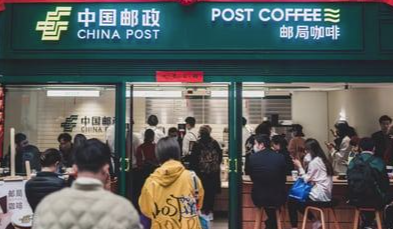
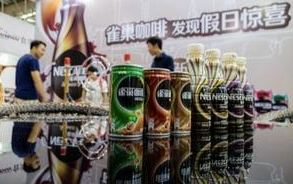
In recent years many companies that did not start in coffee have entered the category. China Post opened Post Coffee cafés, sportswear brand Li-Ning launched Ning Coffee, and Tongrentang's Zhima Health added herbal ingredients to coffee. Dairy groups and international beverage companies have pushed into ready-to-drink coffee.
The logic is the same each time: use an existing store network, brand awareness or supply chain to enter a high-frequency category and reach younger consumers. For international brands it means competitors no longer come only from the coffee industry.
What it means for brands
First, use local taste as the way in. Chinese consumers welcome flavour innovation, and seasonal specials, local ingredients and tea-coffee blends lower the barrier to trial, while classic products signal quality.
Second, communicate around occasions rather than the category. Morning commute, afternoon pick-me-up, office group orders and home brewing each call for a different product format and channel. Honest reviews on Xiaohongshu and content on Douyin are where consumers find new drinks, and more people now simply ask AI assistants such as Doubao or DeepSeek which coffee suits them.
For market size, the main chains and Yunnan's coffee origin, see our analysis of China's coffee market and key players. To build content and reputation for a beverage brand on Xiaohongshu, Douyin and WeChat, see Dékuple China's social media management service.
Key Data & Sources
| Data | Value | Source |
|---|---|---|
| China dry tea output and tea value chain (2024, China Tea Marketing Association) | Over 3.49 million tonnes; RMB 1.13 trillion | https://www.news.cn/enterprise/20251203/c190d55a760b4a08b3f6ea5dcefe97cc/c.html |
| New-style tea drinks market and stores (China Tea Marketing Association) | Above RMB 200 billion; close to 650,000 stores | https://www.news.cn/enterprise/20251203/c190d55a760b4a08b3f6ea5dcefe97cc/c.html |
| Ready-to-drink tea market (2024) | Close to RMB 60 billion | https://www.news.cn/enterprise/20251203/c190d55a760b4a08b3f6ea5dcefe97cc/c.html |
| China coffee consumption (USDA FAS, July 2026) | About 6.42 million 60-kg bags in 2025/26 | https://apps.fas.usda.gov/psdonline/circulars/coffee.pdf |
| Luckin Coffee Q4 2025 results: delivery costs as a share of revenue rose | Attributed to more fourth-quarter delivery orders | https://www.sec.gov/Archives/edgar/data/1767582/000110465926020056/tm267034d1_ex99-1.htm |
FAQ
Will coffee replace tea as China's main drink?
Not in the foreseeable future. Tea's industry and occasions are far larger, with close to 650,000 new-style tea stores alone. The realistic trend is convergence within freshly made drinks, with coffee taking new occasions such as the commute and the working day.
What kind of coffee do Chinese consumers prefer?
Mainly milky and blended drinks with coconut milk, fruit flavours or a tea base, bought as takeaway or delivery. Health-minded drinkers increasingly choose Americanos, black coffee and plant-based milks.
How should international coffee brands compete with new-style tea?
Not head-on. Borrow its methods instead: localised flavours, seasonal launches, mini-program and delivery channels, and steady, credible content on Xiaohongshu and Douyin built around specific occasions.