

The Rise of Coffee in China: Market Size, Key Players and the Yunnan Supply Chain

China's coffee market is still growing, but the race has shifted from opening stores to winning on efficiency and price. Starbucks now runs China through a joint venture, Luckin leads on digital scale, and Yunnan is moving upmarket.
How big is China's coffee market now?
According to the USDA Foreign Agricultural Service's Coffee: World Markets and Trade (July 2026), China consumed about 6.42 million 60-kg bags of coffee in 2025/26, up from 4.92 million bags in 2021/22. That is growth of roughly 30% over four years. USDA forecasts 6.75 million bags for 2026/27.
The figure corrects a claim that has circulated for years: Chinese coffee consumption is not growing 30% every year. A better summary is about 30% over four years. The market has moved from a boom into steady growth, and competition now turns on efficiency and differentiation.
On the supply side, China produced about 1.9 million bags in 2025/26 and imported about 5.75 million bags. Domestic origins are growing, but most demand is still met by imported beans and coffee products.
Starbucks: from pioneer to joint venture
Starbucks opened its first mainland China store in January 1999 at the China World Trade Center in Beijing and for years defined café culture in the country. Its China website says it now runs more than 8,000 stores across over 1,000 county-level markets.
In November 2025 Starbucks announced a joint venture with Boyu Capital for its China retail business, and the deal closed on 2 April 2026. Boyu holds 60% and Starbucks 40%, while Starbucks keeps the brand and intellectual property and licenses them to the venture. The partners' long-term aim is up to 20,000 locations, with a focus on smaller cities and new regions.
The signal is clear. In China, international coffee brands increasingly depend on local capital, local decision speed and the ability to operate in lower-tier cities, not just on brand prestige.
Luckin: scale through digital ordering
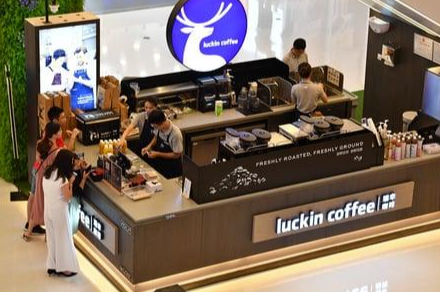
Luckin Coffee was founded in 2017 and built its model around app and mini-program ordering, pick-up and delivery. Its 2025 results show 31,048 stores at the end of 2025, made up of 20,234 self-operated and 10,814 partnership stores, after 8,708 net new openings during the year.
Luckin's 2025 total net revenues were RMB 49.29 billion, up 43.0% year on year, with an average of 94.2 million monthly transacting customers. The mainstream of China's coffee demand is frequent, convenient, predictably priced everyday coffee, not occasional visits to a café as a "third place".
Manner and the local specialty chains
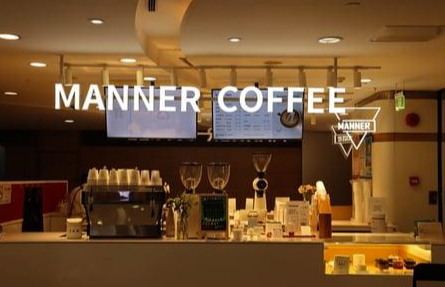
Between Starbucks and Luckin sits a layer of local specialty chains and independent cafés. Shanghai-born Manner built its following with small-footprint stores and specialty coffee at accessible prices, the "specialty but everyday" route. Brands such as Seesaw and M Stand lean more on store design, flavour innovation and urban lifestyle.
Together they turned coffee from a Western status symbol into a daily habit for urban professionals. For European coffee, dairy or bakery brands entering China, they are both potential channel partners and the competitors that set consumers' taste expectations.
Yunnan: a local supply chain moving upmarket
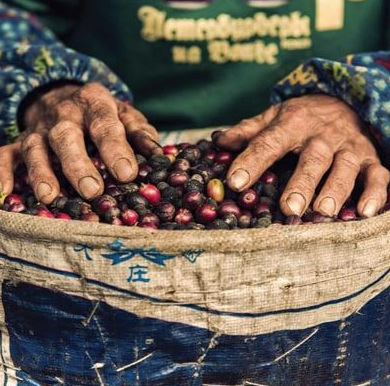
Coffee has been grown in Yunnan for more than 100 years. China News Service reported in December 2025 that in 2024 Yunnan had 1.267 million mu under coffee and produced 146,000 tonnes, both more than 98% of the national total. The main areas are Pu'er, Baoshan, Lincang and Dehong.
Yunnan long exported mostly green beans at low margins. Since 2022 the province has pushed from volume to quality, and the share of specialty-grade coffee rose from 8% in 2021 to 31.6% in 2024. A growing number of international brands and local chains use Yunnan beans or sell single-origin Yunnan products.
For brands, Yunnan origin is now a story in its own right. It combines local pride, traceability and price advantage, and it pushes imported coffee to explain its own origin and quality more clearly.
What it means for coffee brands entering China
The scale players have pushed price and convenience very far, so a new brand rarely wins by competing head-on. The more realistic route is a clear niche: origin, flavour, occasion (home, office, gifting) or channel (e-commerce, ready-to-drink, food service).
Purchase decisions also happen more and more online. Store visits and reviews on Xiaohongshu, content and livestreams on Douyin, and recommendations from AI assistants such as Doubao and DeepSeek all shape whether a brand makes the shortlist. Brands need to keep clear, credible information on those platforms.
To see how Chinese consumers choose between coffee and tea, read our analysis of coffee and tea habits in China. Dékuple China's social media management team helps food and beverage brands build content and reputation on Xiaohongshu, Douyin and WeChat.
Key Data & Sources
| Data | Value | Source |
|---|---|---|
| China coffee consumption (USDA FAS, July 2026) | 6.42 million bags in 2025/26; 4.92 million in 2021/22; 6.75 million forecast for 2026/27 (60-kg bags) | https://apps.fas.usda.gov/psdonline/circulars/coffee.pdf |
| China coffee production and imports (USDA FAS, July 2026) | Production 1.9 million bags, imports 5.75 million bags in 2025/26 | https://apps.fas.usda.gov/psdonline/circulars/coffee.pdf |
| Starbucks' first mainland store and current footprint | First store January 1999, China World Trade Center, Beijing; 8,000+ stores in 1,000+ county-level markets | https://www.starbucks.com.cn/about/ |
| Starbucks and Boyu joint venture announcement (November 2025) | Boyu up to 60%; long-term aim of up to 20,000 locations | https://www.sec.gov/Archives/edgar/data/829224/000082922425000079/a20251103-form8xkxex991.htm |
| Starbucks China joint venture closing (2 April 2026) | Boyu 60%, Starbucks 40% | https://www.sec.gov/Archives/edgar/data/829224/000082922426000064/sbux-04022026xexhibit991.htm |
| Luckin Coffee store count (end of 2025) | 31,048 stores (20,234 self-operated, 10,814 partnership); 8,708 net new in 2025 | https://www.sec.gov/Archives/edgar/data/1767582/000110465926020056/tm267034d1_ex99-1.htm |
| Luckin Coffee 2025 revenue and customers | RMB 49.29 billion net revenues, +43.0%; 94.2 million average monthly transacting customers | https://www.sec.gov/Archives/edgar/data/1767582/000110465926020056/tm267034d1_ex99-1.htm |
| Luckin Coffee founding year | 2017 | https://china.usc.edu/evolution-chinas-coffee-industry-0 |
| Yunnan coffee area and output (2024) | 1.267 million mu and 146,000 tonnes, each over 98% of China's total | https://www.chinanews.com.cn/sh/2025/12-05/10527405.shtml |
| Yunnan specialty-grade share | 8% in 2021 to 31.6% in 2024 | https://www.chinanews.com.cn/sh/2025/12-05/10527405.shtml |
| History of coffee growing in Yunnan | More than 100 years | https://www.chinanews.com.cn/sh/2025/12-05/10527405.shtml |
FAQ
Is coffee consumption in China growing 30% a year?
Not according to USDA data. Consumption rose from 4.92 million bags in 2021/22 to 6.42 million bags in 2025/26, about 30% over four years. That is steady growth, not 30% a year.
Does Starbucks still run its China business?
Yes, but the model has changed. Since April 2026 Starbucks' China retail business has been run by a joint venture in which Boyu Capital holds 60% and Starbucks 40%. Starbucks still owns the brand and licenses it to the venture.
Where should a European coffee brand start in China?
Rather than competing with Luckin or Starbucks on store count and price, focus on a niche: a clear origin and quality story, home or office occasions, e-commerce and ready-to-drink channels, and steady, credible content on platforms such as Xiaohongshu and Douyin.