

Customer Journey Mapping: Your Customer-Winning Formula for China

There is no single formula for marketing in China. A customer journey map is how you build your own: it shows, persona by persona, which platform, message and moment move people to buy, and where they drop off.
Why does China need its own map?
Marketing in China is full of opportunity and full of ways to stumble. Many brands arrive with a global plan and a list of “must-have” platforms, then find that results do not follow.
The Chinese social media landscape is very different from the West, and there is no one-size-fits-all approach. WeChat is essential for most businesses, but that does not mean ignoring Douyin, Xiaohongshu or Baidu. Consumers also vary widely by region, city tier, age and life stage, so one message rarely works for all of them.
What is a customer journey map?
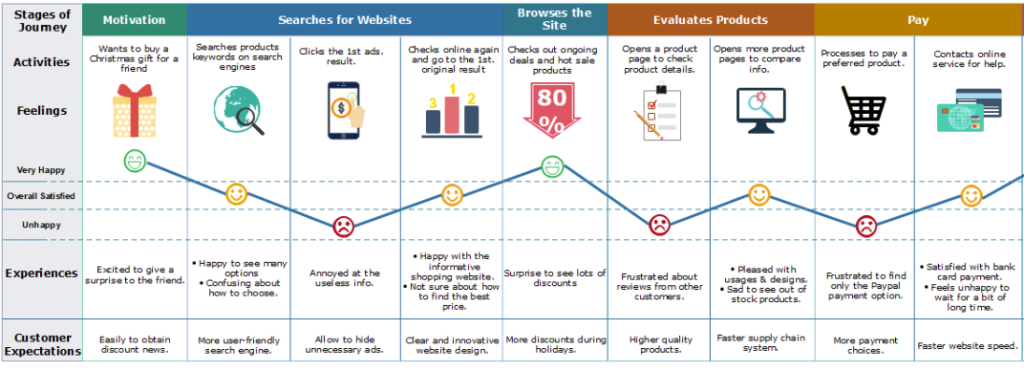
A customer journey map is a visual summary of how one type of customer moves from a first need to purchase and beyond. For each stage it records what the customer does, where they do it, what they think and feel, and what they expect from the brand.
Its purpose is practical: to reach each persona at the right time, on the right platform, with the right message and for the right reason.
How do you build one?
- Start from personas. Define a small set of priority personas from research and data, not assumptions: their needs, motivations and objections.
- Set the stages. For China, go beyond awareness to purchase and include post-sales service and advocacy, because reviews feed the next customer's discovery.
- List touchpoints per stage. Note which platforms each persona uses at each stage: Xiaohongshu notes, Douyin videos, Baidu searches, WeChat articles, flagship stores, customer service chat.
- Add questions and emotions. Write down what the persona is trying to find out at each step, and where they feel confused or frustrated.
- Find the gaps. Mark where people drop off, where your brand is absent, and where your content does not answer the question being asked.
- Assign actions and metrics. For each gap, decide the content, channel and KPI that will close it.
What does the map tell you?
A finished map lets you step back and see the whole picture: how your channels fit together and where the holes are in your strategy. Typical findings are a strong awareness presence on one platform with nothing to answer evaluation questions, or a flagship store that no content points to.
It also shows which messages resonate with whom, how often each persona engages with the brand, and what actually motivates them to buy. Platform choice then stops being a list of “must-haves” and becomes a decision based on your customers.
How do you keep the map current?
A journey map is not a one-off document. Platforms change features and audiences, and habits move. In 2026, for example, many people consult AI assistants such as DeepSeek, Doubao or Qwen when comparing products, a touchpoint that maps drawn a few years ago did not include.
Review the map when you enter a new platform, launch a product or see a stage underperform, and check it against real data: search terms, social listening, CRM and sales.
Our persona workshops are a practical way to build personas and journey maps with your team. For how the journey itself works in China, read why the Chinese consumer journey is a loop.
FAQ
What is the difference between a customer journey and a customer journey map?
The customer journey is the path a customer actually takes, from first need to purchase and beyond. The map is the tool that documents it for a specific persona, stage by stage, so the team can see gaps and plan actions.
How many personas should a journey map cover?
Start with the few personas that matter most to your business and build one map for each. A map that tries to cover everyone becomes too general to guide decisions.
How often should we update our journey map?
Whenever something material changes: a new platform, a product launch, a stage that underperforms or a new behaviour such as AI-assisted research. Check it against search, social listening and CRM data rather than assumptions.