

How to build B2B personas: 5 steps and a persona card template

B2B personas describe the different roles in the buying group, not one "typical customer". Set the scope, interview sales and customers, split out the decision roles, map their journeys, and turn persona questions into keywords, AI prompts and a content plan.
How B2B personas differ from B2C
A B2C persona usually describes one consumer: age, city, interests, shopping habits. In B2B a team decides: procurement, technical staff, user departments and management each have their own questions, and buyers do much of their research before talking to sales.
So a B2B persona answers not "who is our customer" but "who in the customer's company influences this decision, what do they ask at each stage, and where do they look". Use it with segmentation (industry, size, region): segmentation decides which companies to sell to, personas decide content and channels.
Five steps
- Set the scope: one business line, one or two target industries. Trying to cover every customer gives vague results.
- Collect first-hand input: interview sales, service and technical support, review typical won and lost deals, and talk to three to five customers if you can. Use CRM data on industries, roles and sales cycles.
- Split out the buying roles: typically initiator, user, technical gatekeeper, procurement and final decision-maker. Start with the two most influential.
- Map the journey: for each role, what they ask, worry about and where they look at awareness, consideration, decision and use (see customer journey maps).
- Turn it into content and channels: convert each stage's questions into SEO keywords, AI prompts and topics, and mark the gaps in existing content.
Persona card template
| Field | What to write |
|---|---|
| Role and title | e.g. plant equipment manager, responsible for selection and maintenance |
| Role in the decision | Initiator / technical gatekeeper / user / procurement / decision-maker |
| Goals and KPIs | What they are measured on, which shapes what they care about |
| Pain points and concerns | Downtime, risk of switching suppliers, budget |
| Questions they ask | In their own words, e.g. "how do I choose this type of equipment" |
| Information sources | Baidu, DeepSeek, industry sites, trade shows, peer WeChat groups, official accounts |
| Proof that convinces them | Specifications, case studies, certifications, trials, peer referrals |
| What they expect from us | Technical support response, lead times, local service |
LinkedIn's public B2B buyer persona template is a useful reference, but add China's own channels such as WeChat and AI assistants.
Interview questions
- The last time you bought this kind of product, who raised the need first?
- How many suppliers did you compare before deciding, and how?
- Where do you look for information? Do you ask AI, and what do you ask?
- What would make you drop a supplier?
- Who made the final call, and what mattered most to them?
Anchor questions in the most recent real purchase, not "in general". That is what makes the answers usable on a persona card.
A real persona workshop deliverable
Below is what a persona workshop delivered for the China team of a European industrial materials company, with brand and product details removed. The workshop was run with front-line sales and started with the two roles that most influence purchasing; here, the procurement manager.
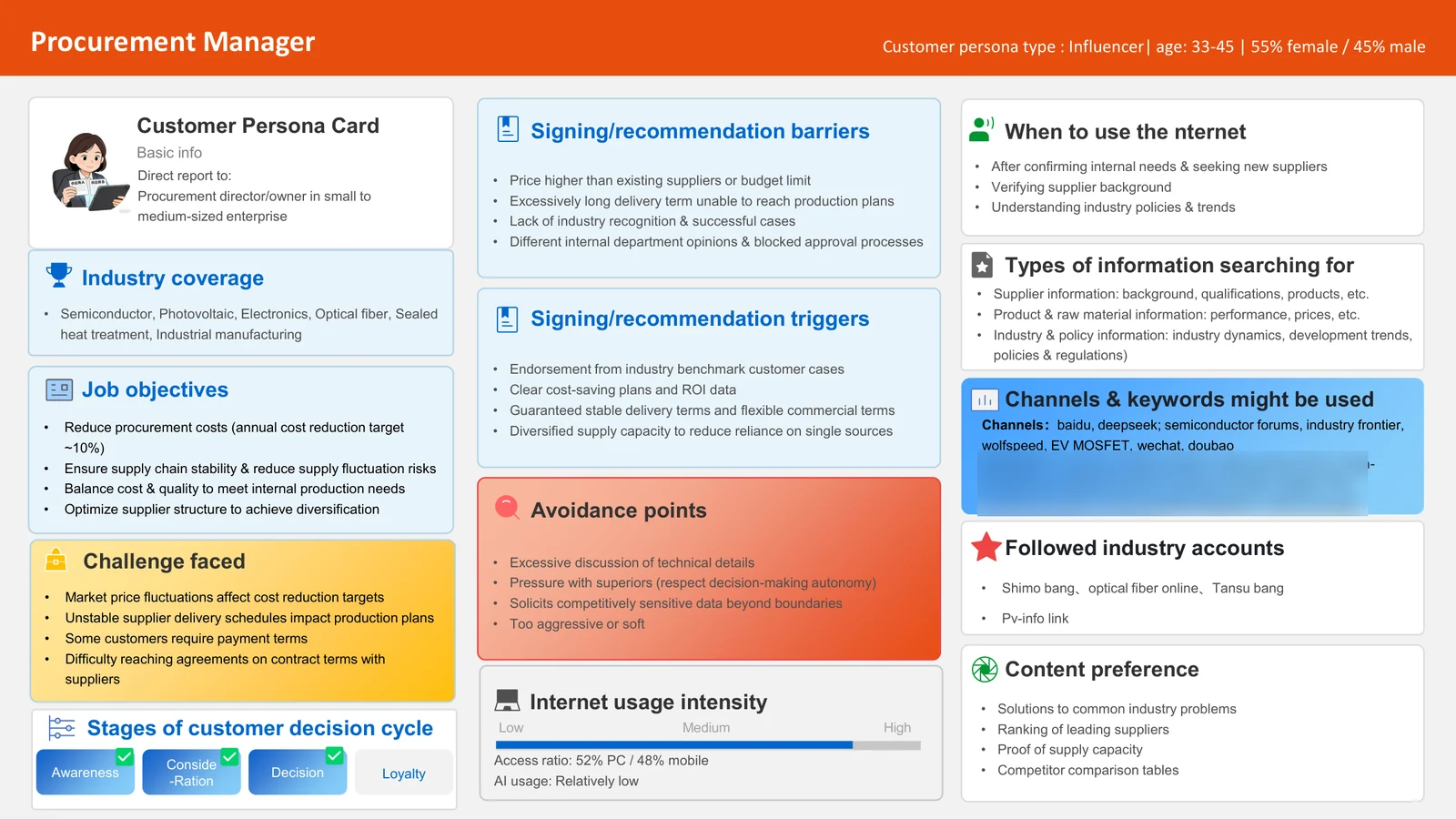
The procurement manager is an influencer whose job is to cut procurement costs (an annual target of around 10%) while keeping supply stable. Barriers to signing include prices above existing suppliers and long delivery times; triggers include endorsements from benchmark customers and clear cost-saving plans.
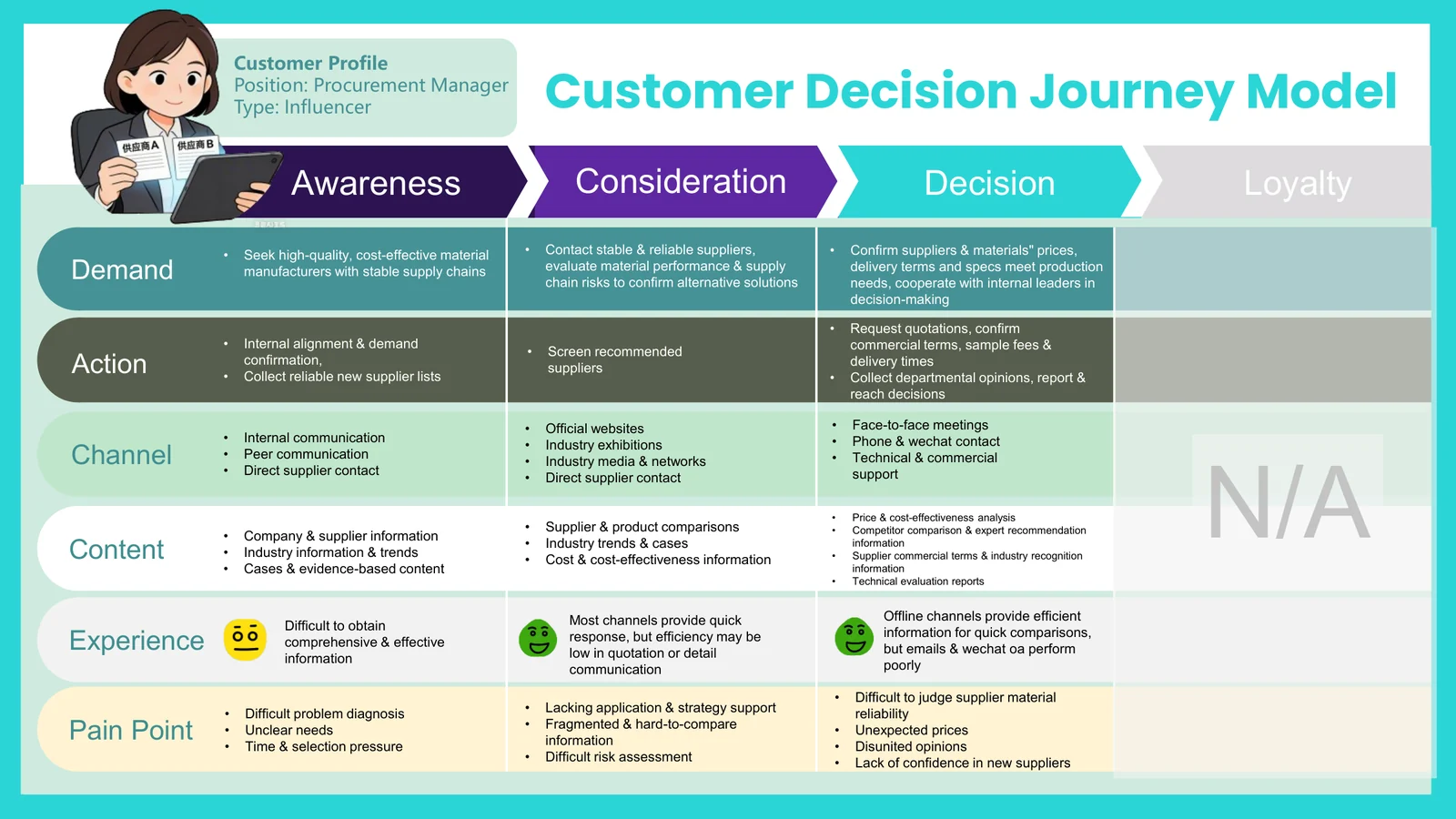
The journey model puts demand, actions, channels, content, experience and pain points for each stage in one table, showing where information is hard to find and where confidence in a new supplier breaks down.
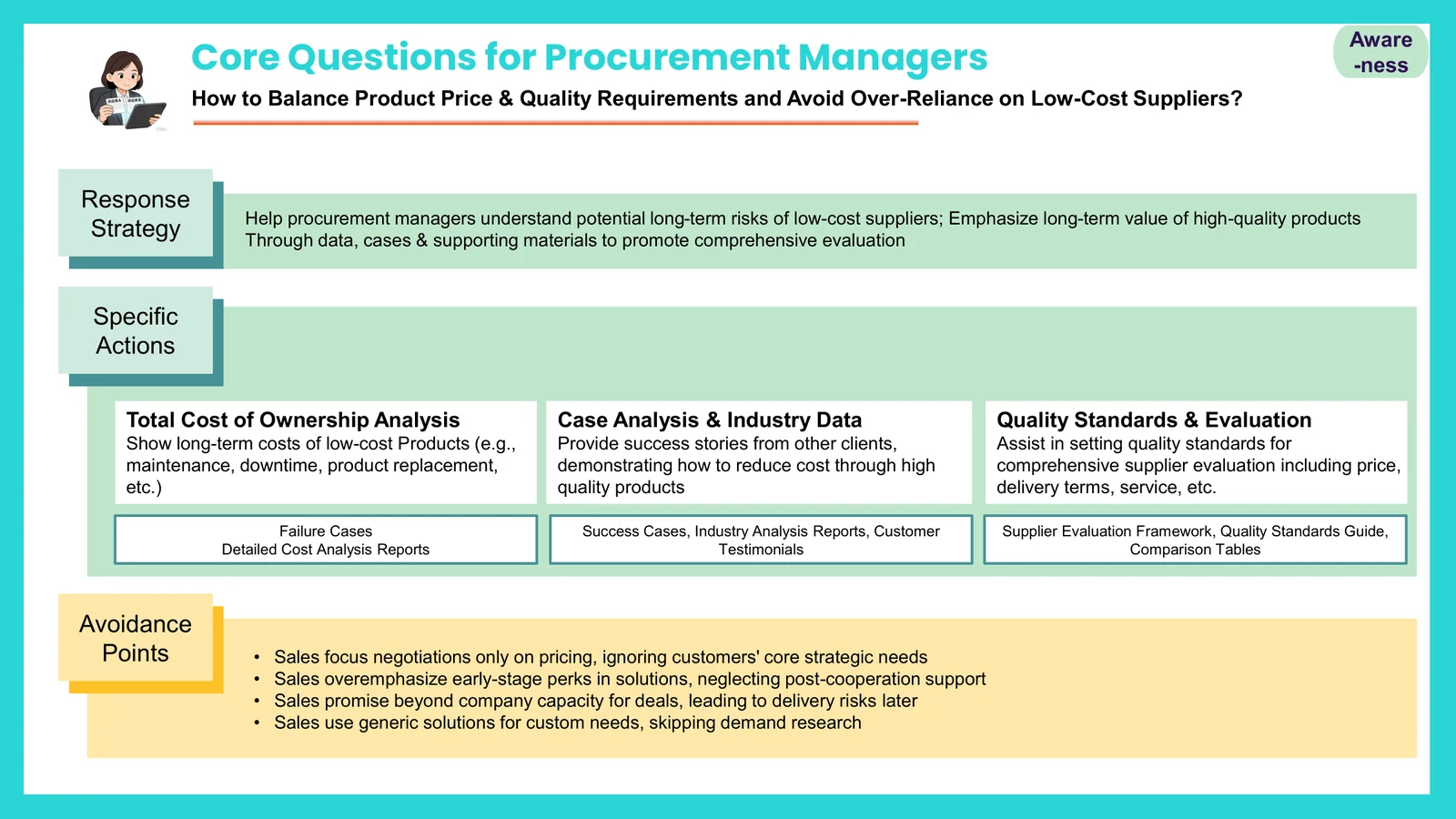
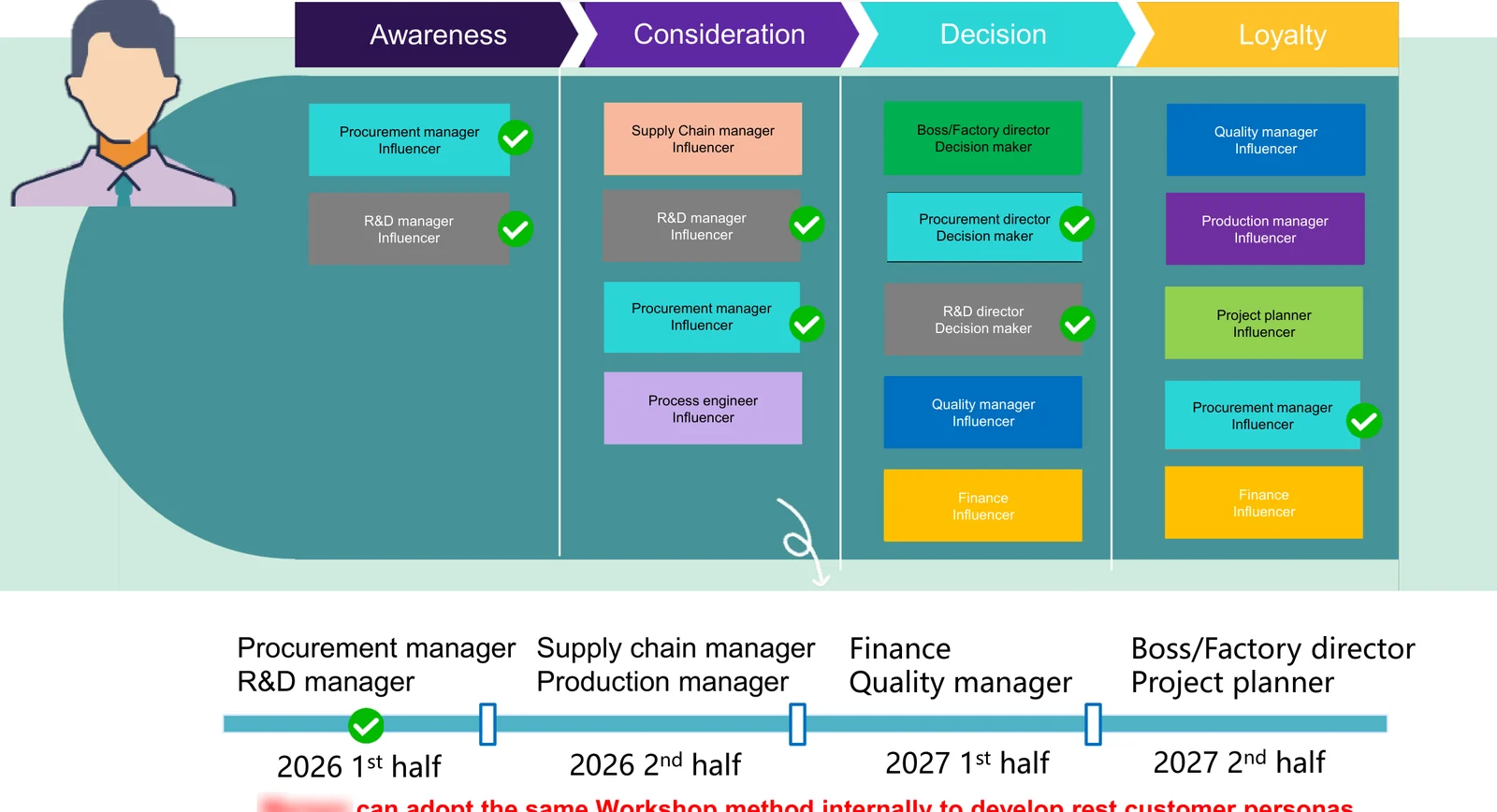
Each stage then gets core questions with a response strategy and concrete actions, such as a total cost of ownership analysis to answer “why not the cheapest supplier”. After the first roles, the same method rolls out to supply chain, production, finance, quality and management roles over the following two years.
Common mistakes, and how personas get used
- Internal discussion only: without input from customers and front-line sales, personas describe an imagined customer.
- Too many personas: start with two priorities and expand once they are in use.
- Filed and forgotten: personas earn their keep in content, search, ads and sales messaging, recalibrated yearly with sales feedback.
The most direct use is planning search and AI search: persona questions become SEO and SEM keywords and GEO prompts. They also shape SCRM tagging and the content that generates leads.
Dékuple China's persona workshops run these five steps in three structured sessions with your cross-functional team, delivering persona cards, journey maps and a content gap list.
Key Data & Sources
| Data | Value | Source |
|---|---|---|
| B2B buyer persona template | PDF template | LinkedIn Marketing Solutions |
FAQ
How should a B2B company build personas?
Five steps: limit the scope to a business line and industries; interview sales, service and customers and use CRM data; split out the buying roles and pick two priorities; map each role's journey; turn each stage's questions into keywords, AI prompts and a content plan.
How many B2B personas do we need?
Start with the two roles that most influence the purchase, such as the technical gatekeeper and the final decision-maker, then expand by business line or industry once they are in use.
What is the difference between personas and segmentation?
Segmentation answers which companies to sell to (industry, size, region); personas answer who inside them decides, what they care about and where they look. Use both.
Can we build personas without much customer data?
Yes. Experience from sales, service and technical support plus three to five customer interviews is enough for a first version; recalibrate later with CRM and website data.