

WorkBuddy adds a WeChat Pay AI card: AI now goes from recommendation to payment. How should brands prepare?

With a dedicated WeChat Pay AI card in WorkBuddy, one sentence is enough for AI to recommend Meituan deals, place the order and pay. As AI agents start choosing and buying for people, whether AI understands and recommends a brand decides whether it makes the shortlist.
What launched
After adding computer use, Tencent's WorkBuddy has closed the payment loop: the PC version now supports a dedicated WeChat Pay AI card and can call a Meituan life assistant to find local deals, order and pay. In the official demo the flow runs like this:
- update WorkBuddy PC to the latest version and call the Meituan life assistant in a chat;
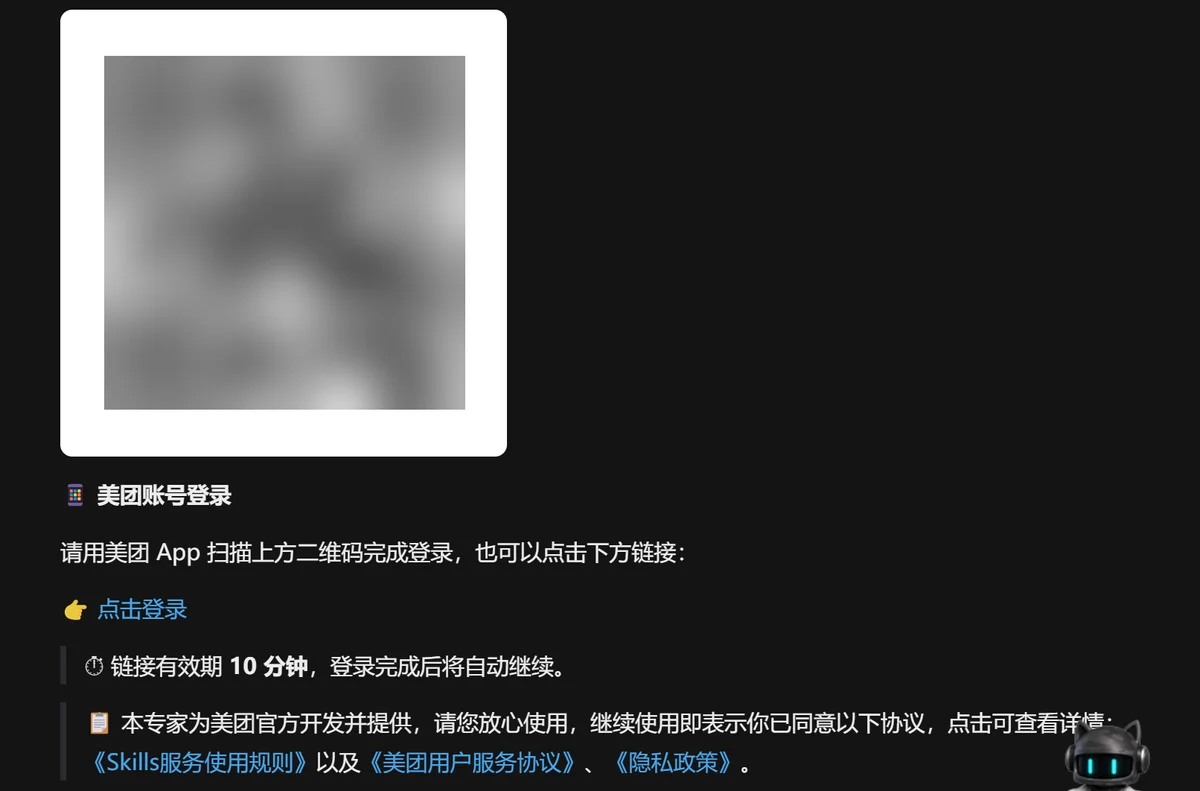
- type your address; WorkBuddy shows a QR code, and you scan it with the Meituan app to link your account;
- once linked, it recommends group-buy vouchers based on your location and preferences, such as nearby tea drinks or restaurant set meals;
- pick an item and an authorisation prompt for the WeChat Pay AI card appears; scan to authorise and pay;
- show the voucher in store to redeem it. Typing "get me Meituan coupons" also claims coupons and a WorkBuddy-user coupon pack.
Why marketers should care: AI is starting to buy
Discussion of AI search has so far been about whether AI mentions your brand. The change here is that AI does more than answer: it chains search, recommendation, ordering and payment together. A user says "any good food deals nearby?" and every step after that happens inside the AI chat, without a search results page, a comparison site or the brand's website.
It is another example of the closed-loop Chinese consumer journey, only this time the loop closes inside an AI assistant. For brands, being picked for the AI's shortlist is now the shelf. If you are not picked, the user may never see you.
The dedicated card plus per-purchase authorisation design is worth noting too. The AI does not touch the user's main payment account; it uses a separate card, and a person confirms each order by scanning. That matches what we recommended in our computer use article, that people confirm payments and submissions, and it is likely a precondition for the public to accept AI agents transacting for them.
Four things brands and merchants can do first
- Make platform listings clear. When AI recommends deals it reads the product name, price, what the set includes, store address and reviews on the platform. Vague names, incomplete set descriptions or outdated store details make it hard for AI to judge whether an offer suits the user.
- Make sure AI knows you on the open web too. Beyond in-platform recommendations, users also ask AI which café suits remote work or which brand is more reliable. Those answers cite open web pages; see our practical GEO guide and how to get a brand into DeepSeek's answers.
- Keep watching how AI recommends you. AI recommendations and sources move fast; our tests found that AI's sources change every month. Check regularly with a fixed set of questions whether the brand is mentioned, where it ranks and whether the description is accurate; for metrics, see how to measure GEO results.
- Turn one AI transaction into a relationship. A customer who ordered through AI still meets the brand in person when redeeming in store. Bring them into membership, WeCom or the Official Account; see our WeChat SCRM guide.
Not a distant issue for B2B brands either
Group-buy vouchers are the easiest product to standardise, so they come first. But the "AI shortlists, a person confirms" model will spread to more complex purchases: AI lists candidate suppliers, compares specs and downloads brochures, then a person decides. At that point, whether AI can read your website and product materials decides whether you make the shortlist.
To see how your brand currently shows up across AI platforms, start with an AI visibility diagnosis using Brand Pulse. To systematically improve the brand's place in AI answers and recommendations, see our GEO service; for membership after the sale, start with SCRM and marketing automation.
Key Data & Sources
| Data | Value | Source |
|---|---|---|
| WorkBuddy website and client download | workbuddy.cn | Tencent WorkBuddy |
| WorkBuddy WeChat Pay AI card demo video (2026-11) | Official demo: call the Meituan life assistant, scan to log in, authorise the AI card, order and redeem | Tencent WorkBuddy |
FAQ
What is the WeChat Pay AI card in WorkBuddy?
A payment method in WorkBuddy PC: when ordering, the user scans to authorise a dedicated WeChat Pay AI card, and the AI assistant pays with that card. Each payment needs the user to scan and confirm.
How do you buy Meituan deals in WorkBuddy?
Update WorkBuddy PC, call the Meituan life assistant and enter your address, then scan to log in to Meituan. The AI recommends vouchers by location and preference; pick one, authorise the WeChat Pay AI card, pay, and redeem the voucher in store.
How do AI agents placing orders affect brand marketing?
AI puts search, recommendation, ordering and payment into one conversation, so users may no longer browse search results or brand websites. Brands need clear, complete platform listings, content AI can understand and cite on the open web, and regular monitoring of AI recommendations.
Do B2B brands need to care about AI agents buying?
Yes. Complex purchases will stay with people for now, but AI will increasingly shortlist suppliers, compare specs and collect materials. Whether AI can read a brand's website and product materials will affect whether it makes the shortlist.